How three fishermen made October the best month of the year
In 1948, three fishermen started a tournament to bring people to Destin. Then they moved it to October. Seventy-eight years later, it's still the best month of the year.
By What's Good Local
The Sixth Annual Destin Gulf Coast Fishing Rodeo, 1953: "Entire month of October." Image courtesy of the Destin History & Fishing Museum, digitally enhanced.
There is a version of this story where October in Destin is just good luck. The heat breaks. The crowds thin. The water stays warm long after the pools up north have been covered for the season. Highs settle around 80, lows drop into the 60s, and the Gulf turns the particular shade of green that people drive nine hours to see.
That version is wrong, or at least incomplete. October in Destin is good on purpose. Somebody decided it.
In May of 1948, a handful of Destin fishermen, Howard Marler, Jewel Melvin and Willie Marler among them, put together a fishing tournament for a straightforward reason: they wanted more people to come to Destin. It worked well enough that the town picked up a nickname it still uses, the World's Luckiest Fishing Village, and a reputation as a summer destination.
Then they did the thing that actually mattered. They moved it to October.
The logic was pure small-town economics. Summer took care of itself. What Destin needed was another month on the end of the season, one more stretch of full rooms and booked boats before the winter quiet. So they took their tournament and dropped it into the month that needed help.
Somebody decided it.
It is difficult to overstate how well that worked. The Destin Fishing Rodeo now runs the entire month, October 1 through 31, and it is the reason October stopped being a shoulder season here.
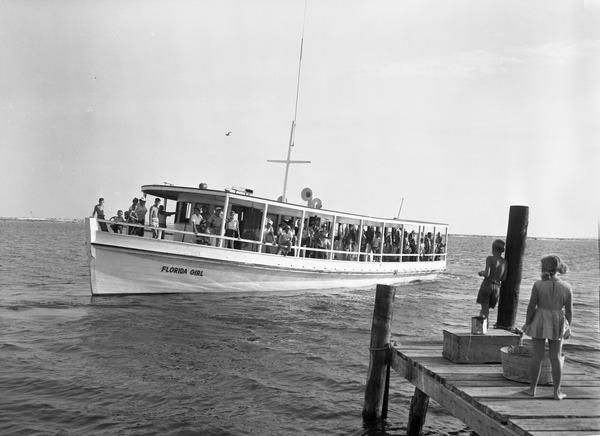
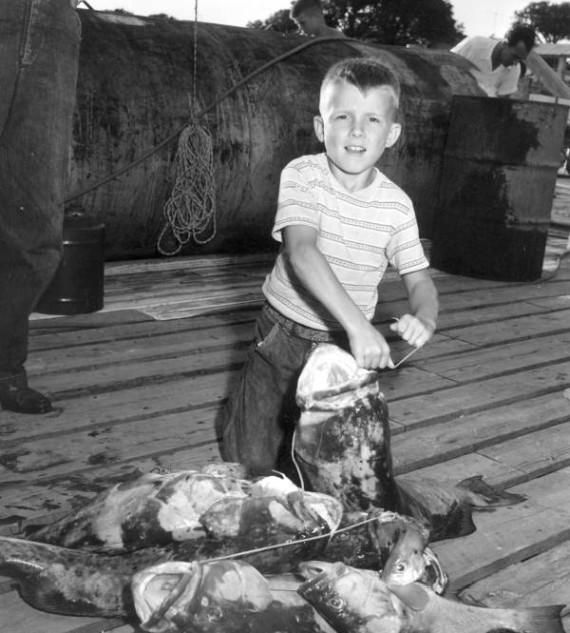
The party boat Florida Girl during the 1955 Rodeo.A boy and his catch, 1955.
Photos: Francis P. Johnson / State Archives of Florida (C021874, C021879)
The prizes were strange and the stakes were real
The early years read like a fever dream of postwar optimism.
The first King Mackerel champion won a kitchen. Not money for a kitchen: an actual refrigerator, an actual stove, and, as the Rodeo tells it, even the kitchen sink. Two years later the top prize was a lot in Destin, surveyed, titled, insured, valued at $500. Somebody won a piece of this town for catching a fish.
Further down the board the rewards got more specific. The largest Triggerfish in 1951 was worth twenty-five dollars, one windshield wiper, and twelve cans of beer.
The Rodeo notes, with what reads as genuine regret, that it no longer awards kitchen appliances or beer. Today it's rods and reels, fishing trips, weekend stays, and cash. As for the lot in Destin, the Rodeo has said publicly it would be happy to give one away again, if someone wants to donate it.
Nobody has.
What it looks like now
The 78th Rodeo runs all of October with 29 divisions, which sounds like bureaucracy until you understand what it's actually doing. There are categories for charter boats and private boats, for piers and jetties and surf, for kayaks and paddleboards. There are junior, teen, ladies, and senior divisions. A rules committee meets every year to sort out eligibility as state and federal regulations shift, and Red Snapper joins the board for 2026 under its own set of date restrictions.
The point of all that structure is that a ten-year-old on the Okaloosa Island Pier and a crew sixty miles offshore at the DeSoto Canyon are in the same tournament. That was true in 1948 and it's true now.
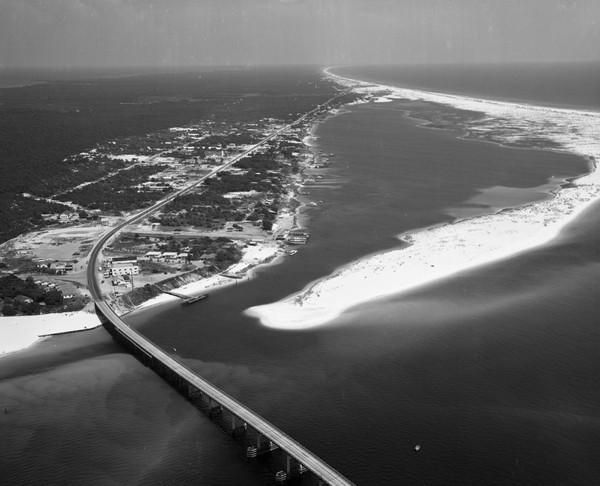
East Pass Bridge and US 98, 1959. State Archives of Florida (C030878)
But the part most visitors miss is the part that costs nothing.
Every day in October, from 10 in the morning until 7 at night, the boats come back to the docks behind AJ's Seafood & Oyster Bar and hang their fish on the scale. The leaderboard stands right next to the dock. There's a small grandstand underneath it. It is free, it is open to anybody, and it runs every single day for a month.
When a shark or a big grouper or a tuna comes off a boat, the crowd goes standing-room-only.
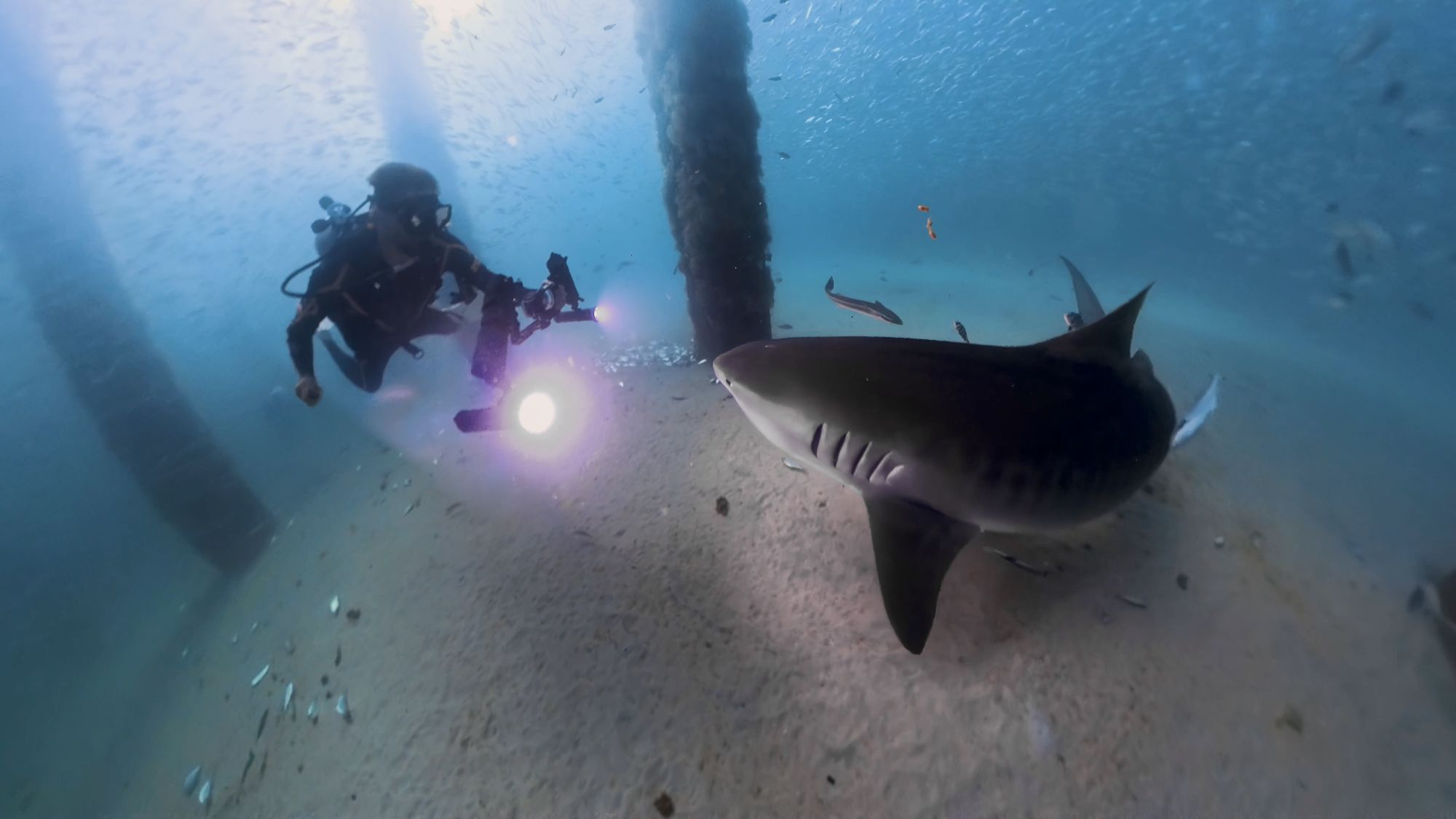
Every Saturday in October is a competition for the largest shark brought to the scales: mako, hammerhead, thresher, tiger, bull. Anglers get one entry for the day, which means nobody is bringing in a small one on purpose.
Why any of this matters in a magazine about what's good locally
Because the Rodeo is the clearest example we have of something this coast does well and rarely gets credit for: a town solving its own problem and then just keeping it.
Seventy-eight years is a long time for anything to run without turning into a costume of itself. The Rodeo could have become a logo on a t-shirt years ago. Instead the weighmaster still calls out the fish, and the grandstand is still full of people who have no intention of fishing and every intention of watching.
It's free. It's been free the whole time.
Three men wanted one more month of visitors. They got seventy-eight Octobers and counting, and they gave the rest of us the best month of the year in the process.
If you are reading this in October and you are anywhere near the harbor around four in the afternoon, go stand by the scale. It's free. It's been free the whole time.
Go see it
Check the Rodeo's official schedule before you go.
DailyOct 1–31
Weigh-ins, 10 AM – 7 PMThe docks behind AJ's Seafood & Oyster Bar, Destin Harbor. Free and open to everyone.
EverySat
Shark SaturdaysLargest shark to the scales. One entry per angler.
Archive photos: Francis P. Johnson / State Archives of Florida, public domain. Rodeo sign, 1953: courtesy of the Destin History & Fishing Museum.